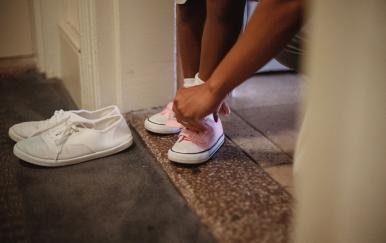
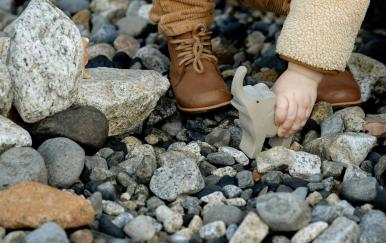
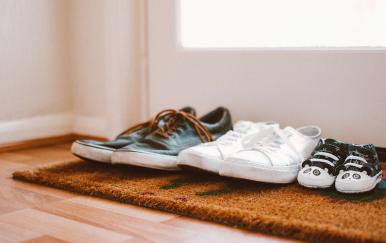
Before any shoe, before any instruction, before any hand held out for balance — there is the floor. The floor is where walking is actually learned: through contact, through feedback, through the thousand small negotiations between a foot and a surface that gradually become a stride. The shoe arrives later, and its job is to make sure it doesn't interrupt the conversation already in progress.
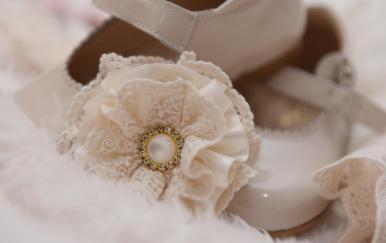
In design, the edge is where decisions become visible. The edge of a garment, the border of a table setting, the trim of a cushion or curtain — these are the points at which the choices made about material, proportion, and finish are most legible. Lace, applied at the edge, performs a specific and irreplaceable function: it marks the boundary between one thing and another with a complexity and refinement that no other finishing technique quite matches.
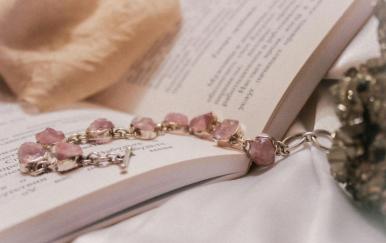
There is a difference between acquiring a crystal bracelet and choosing one. Acquiring is a transaction — a bracelet is selected from available options on the basis of price, appearance, and availability. Choosing is something more considered — a process of looking carefully, comparing, understanding what distinguishes one stone from another, and arriving at a selection that reflects genuine knowledge of what is being selected. The collector's eye is not an innate gift. It is a skill developed through attention, and it begins with knowing what to look for.
A baby learning to walk is not learning something entirely new. The mechanics of bipedal movement are encoded in human biology — the architecture of the foot, the structure of the ankle, the proportions of the leg are all designed, over millions of years of evolution, for exactly this purpose. What the child is doing is not inventing walking. They are discovering that they already know how.
Every road surface produces particulate matter. The process is continuous and invisible — the grinding of tires against asphalt, the friction of brake pads against rotors, the mechanical disturbance of settled dust by passing vehicles, the combustion residue of every engine ahead of and behind the one in question. This particulate environment is the constant companion of every drive, in every vehicle, on every road. The question is not whether it is present. It is how much of it enters the vehicle.
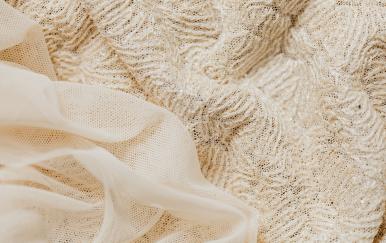
There is a paradox at the heart of fine lace: it is among the lightest of fabrics, and among the most substantial in effect. A square meter of quality lace weighs almost nothing. Its presence in a room, on a garment, at a table, weighs considerably more. Understanding this paradox — how a material with so little physical mass produces such a pronounced experiential impact — is understanding what lace actually is and what it is actually doing.
We measure time in days and years. Crystals measure it in millions of both. This disproportion is not merely a geological fact — it is, for anyone who thinks about it for a moment, a genuinely perspective-shifting one. The stone on the wrist was forming before the first human being existed. It will outlast every object manufactured in the last century. Its patience is not metaphorical. It is structural, written into the atomic lattice that gives it its form.
Every time a car engine starts, it begins a process of extraordinary precision — thousands of controlled combustions per minute, each one dependent on the correct ratio of fuel to clean air. The engine air filter is the first line in this process. What passes through it determines what every subsequent component works with.
Certain fabrics mark certain moments. Lace has always been the fabric of occasions that matter — not because it was designated for this role by any authority, but because its qualities make it the natural choice when the stakes are high enough to warrant more than the ordinary.
Every natural crystal has a provenance — a specific place, depth, and set of conditions that produced it and no other. This geography is not incidental to what the stone is. It is constitutive of it. The crystal from a Brazilian mine and the crystal from a Madagascan deposit may share a mineral classification, but they carry different histories, different inclusions, different internal structures. They are, in any meaningful sense, different objects.
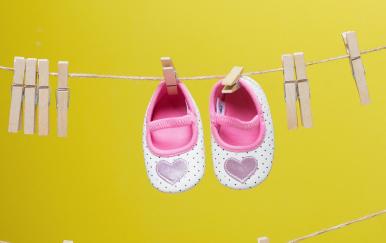
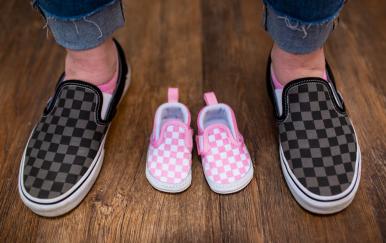
Learning to walk is the most complex motor skill a human being will ever acquire — and it is accomplished, without instruction, before the age of two. The foot is the primary instrument of this learning. What surrounds it during the process either supports that learning or complicates it.
A journey is commonly understood as the space between a starting point and a destination — something to be completed rather than experienced, a necessary interval before arrival. But the hours spent in transit are hours nonetheless, and the quality of the environment in which they are spent is not incidental to the quality of the day they are part of. The cabin of a car is not a waiting room. It is a space, and the air inside it is a condition of everything that happens there.
Vision is the sense that interior design most consistently addresses. The photographs, the renderings, the carefully curated mood boards — all of them are addressed to the eye alone. But the experience of living in a space is not primarily visual. It is tactile, thermal, acoustic. It is the texture of what the hand encounters, the weight of what drapes across a surface, the particular quality of a fabric that rewards being touched rather than merely being seen. Lace, more than almost any other textile, is made to be touched.
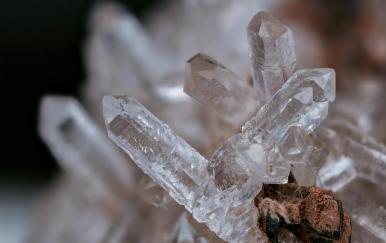
There is a moment, familiar to anyone who has held a natural crystal up to the light, when the stone seems to wake up. The surface, which appeared solid and static a moment before, suddenly reveals depth — layers of internal structure, traces of color, the ghost of a fracture that caught and held a spectrum. The stone does not change. The light does not change. Only the angle changes, and the stone shows you something it was keeping for exactly this moment.
There is a fundamental difference between a shoe that leads and a shoe that follows. A shoe that leads imposes — a fixed shape that the foot must accommodate, a sole that determines how the foot meets the ground, a structure that substitutes its own geometry for the foot's natural one. A shoe that follows does the opposite: it takes its cues from the foot, bends where the foot bends, widens where the foot spreads, and steps back from every decision the foot is capable of making for itself. At no stage of life is this distinction more consequential than in the first years of walking.
Seasons change gradually and then suddenly. The temperature that has been dropping by a degree or two each week reaches a threshold one morning and the character of the air is simply different — heavier, colder, carrying things it wasn't carrying before. For the vehicle that has been running on a filter installed in a different season, under different conditions, this transition is the moment when the gap between what the filter can do and what is being asked of it becomes most apparent.
Space, in interior design, is not only a matter of square footage. It is a matter of perception — and perception is shaped by light, texture, and the visual weight of what fills a room. A heavy curtain reduces a room. A bare window expands it but exposes it. Lace at a window does something neither alternative achieves: it holds the space open while giving it definition. It creates room without taking any away.
There is a practice, common across many contemplative traditions, of returning attention to a single physical object as a way of interrupting the momentum of an overactive mind. The object does not need to be sacred or significant in any formal sense. It needs only to be present, consistent, and grounding — something the attention can rest on without effort, and return to without ceremony. A natural crystal bracelet, worn daily, functions this way with a reliability that few other objects match.
The foot remembers what it learned early. Not in any conscious sense, but in the way that the body encodes its formative experiences — in the alignment of bones that set while still cartilage, in the muscle patterns established during the first years of walking, in the gait habits that become so automatic they require no thought. This is not determinism. Feet are adaptable, and problems caught early resolve more easily than those discovered later. But it does mean that the choices made during this window carry a weight that the choices made later do not.
Our customer service is online 24 hours a day
Submit
Home Tel Mail Inquiry