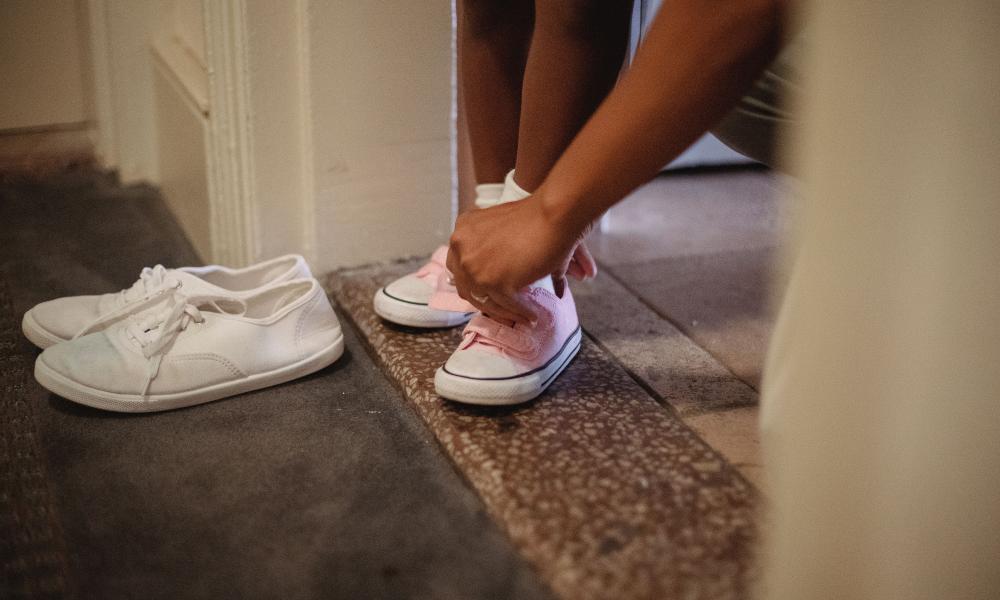
A baby learning to walk is not learning something entirely new. The mechanics of bipedal movement are encoded in human biology — the architecture of the foot, the structure of the ankle, the proportions of the leg are all designed, over millions of years of evolution, for exactly this purpose. What the child is doing is not inventing walking. They are discovering that they already know how.
The Inherited Architecture
The human foot is a structure of considerable engineering sophistication. Twenty-six bones, thirty-three joints, and more than a hundred muscles, tendons, and ligaments — all arranged to perform a specific set of functions: absorbing impact, transferring force, providing sensory feedback, and adapting dynamically to uneven surfaces. This architecture did not develop in response to footwear. It developed in response to the demands of barefoot locomotion over varied terrain, and it remains optimized for that environment even in a world where bare feet rarely meet bare ground.
The implication for children’s footwear is significant. The foot a child is born with already contains everything needed for walking — the arch that will strengthen through use, the toes that will spread to provide grip and balance, the heel that will absorb the impact of each step. The shoe’s role in this context is not to provide structure that the foot lacks, but to protect a structure that already exists from conditions that would damage it.
Activation Through Movement
The structures of the foot strengthen through use — specifically through the patterns of loading and unloading that occur during natural, unimpeded movement. The intrinsic muscles of the arch, which are responsible for its long-term structural integrity, develop in response to the work of supporting the body’s weight across varied surfaces and positions. A shoe that provides artificial arch support during the years when these muscles should be developing their own capacity removes the stimulus for that development, producing a foot that is dependent on external support rather than generating its own.
This is not a theoretical concern about distant consequences. It is a practical observation about the relationship between the shoe chosen now and the foot that emerges from the formative years — stronger and more capable if it was allowed to do its own work, or weaker and more reliant on support if it was not.
Trusting the Process
The most common impulse in children’s footwear — to add support, to correct perceived deviations from a straight line, to intervene in a process that looks unstable or uncertain — is frequently the opposite of what the developing foot needs. Flat feet in toddlers are normal; the arch develops gradually through the first several years of walking and should not be artificially elevated before it has had the opportunity to form naturally. Toe-in and toe-out gait patterns are common in early walkers and typically self-correct as the hip muscles strengthen and the gait pattern matures. The foot knows what it is becoming. The shoe’s job is to give it room to get there.
The foot knows what it needs to become. Give it the conditions to find out.