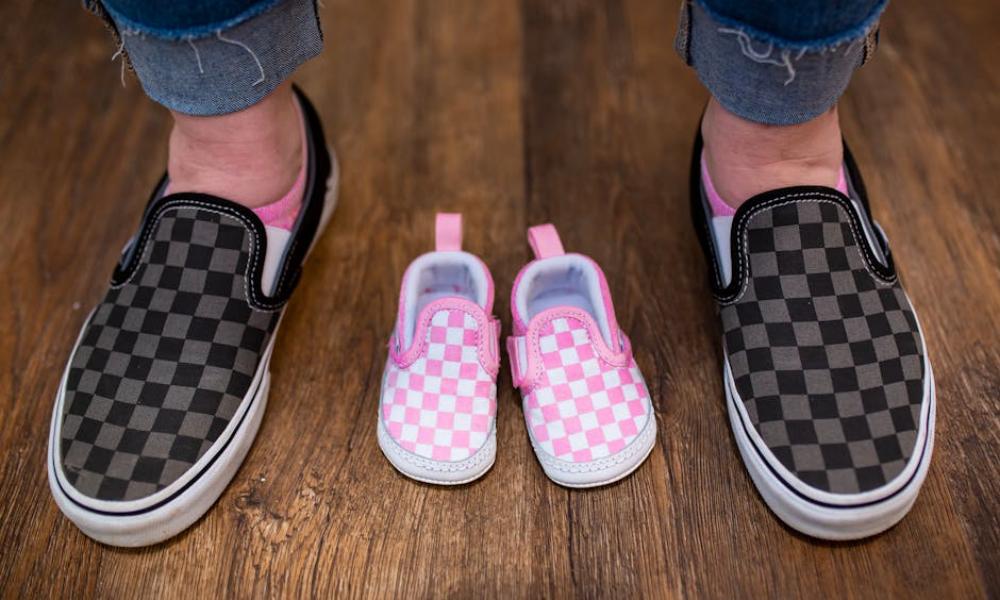
There is a fundamental difference between a shoe that leads and a shoe that follows. A shoe that leads imposes — a fixed shape that the foot must accommodate, a sole that determines how the foot meets the ground, a structure that substitutes its own geometry for the foot’s natural one. A shoe that follows does the opposite: it takes its cues from the foot, bends where the foot bends, widens where the foot spreads, and steps back from every decision the foot is capable of making for itself. At no stage of life is this distinction more consequential than in the first years of walking.
Motion as the Starting Point
The foot in motion is not the foot at rest. When a child takes a step, the foot goes through a sequence of positions — heel contact, weight transfer across the midfoot, push-off through the ball and toes — each of which places different demands on the shoe surrounding it. A sole that is appropriately flexible allows this sequence to complete naturally. A sole that is too rigid interrupts it, forcing the foot to work around the shoe’s limitations rather than through its own natural mechanics.
The consequence of this interruption is subtle but cumulative. A child whose foot cannot complete its natural motion sequence with each step compensates — unconsciously, automatically — by modifying gait in ways that distribute the deficit elsewhere. These compensations are efficient in the short term and problematic over time, encoding movement patterns that the body will continue to use long after the shoe that prompted them has been outgrown.
The Upper That Adapts
The upper of a well-designed children’s shoe adapts to the foot rather than containing it. This means materials with enough give to accommodate the natural swelling of the foot across a day of activity — a foot that is measurably wider and slightly longer at the end of an active afternoon than it was at the beginning of a quiet morning. It means seams and construction details placed where they will not create pressure points against the specific topography of a developing foot. It means a collar soft enough to move with the ankle rather than against it.
These are not luxury specifications. They are the baseline requirements of a shoe genuinely designed for the foot it will contain, rather than one designed for the market it will be sold to.
Fit as an Ongoing Conversation
A child’s foot does not arrive at a size and stay there. It grows continuously, with periods of acceleration that can move a child through a full size in weeks. The shoe that fits correctly at the beginning of the month may be creating pressure by the end of it — pressure that the child may not articulate as discomfort because they have no reference point for what the absence of pressure feels like. Regular fit checks — every six weeks during peak growth phases — are the mechanism by which the shoe continues to follow the foot rather than constraining it.
The best shoe takes its orders from the foot. Not the other way around.