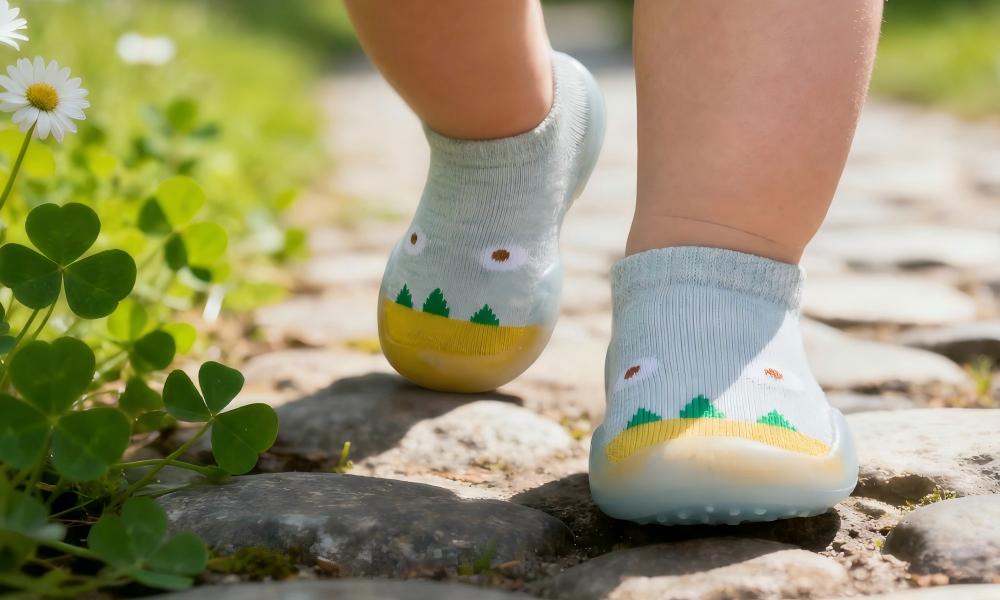
Nobody teaches a child to walk. They simply begin — falling, adjusting, trying again with a slightly different weight distribution, a slightly more confident lean. The body figures it out on its own, given enough freedom and enough time. The only thing a shoe needs to do is not interfere.
Let the Ground Do the Teaching
Every surface a child walks on is a lesson. Carpet teaches give. Stone teaches firmness. Grass teaches unpredictability. A sole that transmits these differences rather than erasing them is doing something quietly important — it is feeding the nervous system the information it needs to build balance, coordination, and spatial awareness from the ground up. Protection and perception are not opposites. The right sole provides both.
Hold Without Holding Back
A heel counter that stabilizes without gripping. A collar soft enough to forget. A fit that moves with the foot rather than around it. These are not comfort features. They are developmental ones — the difference between a shoe that supports a child’s growth and one that simply covers their feet. The distinction matters more than it looks.
The Shoe That Earns Its Place
A child will tell you, with great clarity and no diplomacy, when something on their body bothers them. The goal is a shoe that never prompts that conversation — one worn through an entire afternoon of concentrated play without a single complaint, removed at bedtime without a single red mark. Unremarkable in the best possible way.
The best support is the kind that goes completely unnoticed.